

Injections
Medical botox for pain
Medical botox for pain
Botox for pain is used for medical conditions in which muscle tension or nerve activity contributes to discomfort. Treatment is planned after medical assessment, according to pain type, location, and response to previous care.
Book a consultation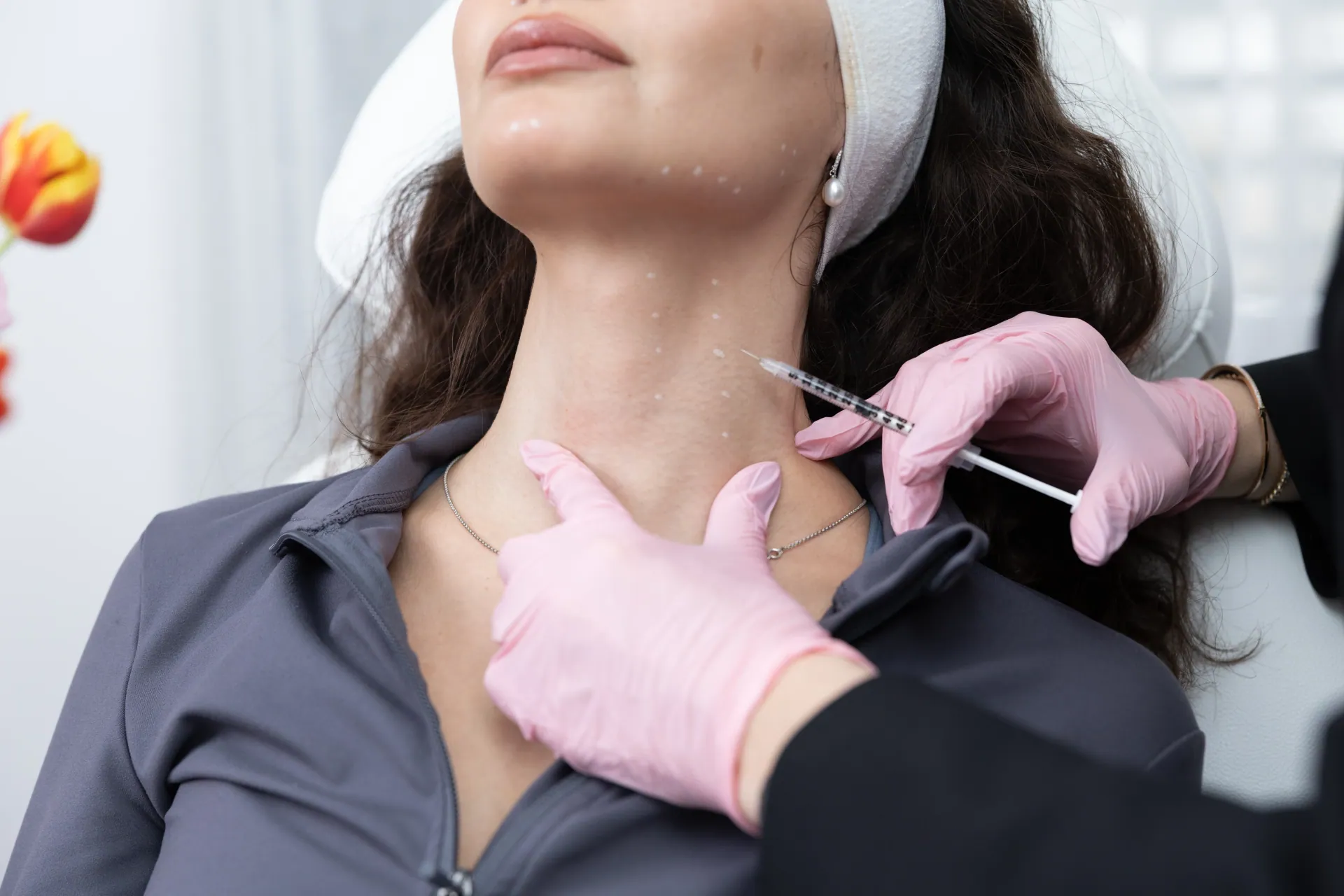
What is botulinum toxin in medical treatment?
Botulinum toxin is a protein derived from the bacterium Clostridium botulinum. In medicine it has been used in a controlled, safe way for decades for both aesthetic and medical purposes.
When injected into a muscle in precise amounts, it temporarily reduces muscle activity and causes relaxation. As a result, pain, muscle tension, and related medical symptoms may improve.
Established, evidence-based medical treatment
Botulinum toxin has been used for many years to treat medical conditions including chronic migraine, muscle tension, and teeth grinding.
In medicine it has been used in a controlled, safe way for decades, for both medical needs and related aesthetic concerns.
Precision in injection and medical diagnosis allow safe tailoring to each patient’s condition.
Types of treatment
Injections are tailored to the area and medical goal; there may also be an accompanying aesthetic benefit.
Teeth grinding and jaw clenchingBruxism
Treatment of the masseter muscle.
Botulinum toxin injected into the masseter helps reduce contraction strength and can significantly ease symptoms.
In some cases a narrower, softer jawline can also be achieved.
Teeth grinding and jaw clenching may cause:
- Jaw pain
- Headaches
- Tooth wear
- Load on the temporomandibular joint
Trap Tox – trapezius injection
Injection of botulinum toxin into the trapezius muscle.
The treatment serves both medical and aesthetic goals.
Medical benefits
- Reduced neck pain
- Reduced shoulder pain
- Release of chronic muscle tension
- Improved range of motion
Aesthetic benefits
- Softer shoulder appearance
- Illusion of a longer neck
- Better proportions between neck and shoulders
Migraine and headache treatment
Botulinum toxin has been used for many years to treat chronic migraine.
Treatment is performed with injections in several areas.
Injection areas
- Forehead
- Temples
- Scalp
- Occiput
- Neck
- Trapezius
Benefits
- Fewer migraine episodes
- Reduced pain intensity
- Less need for pain medication
- Improved quality of life
- Treatment duration
- 15–20 minutes
- Discomfort level
- Results
- Within one to three weeks
- Number of treatments
- One treatment
- Follow-up
- If needed, about two weeks after treatment
- Duration of effect
- 4–6 months
Questions & answers
How does the treatment work?
Under normal conditions, a nerve releases a substance called acetylcholine. Acetylcholine carries the signal to the muscle and makes it contract.
Botulinum toxin acts at the nerve ending and blocks the release of acetylcholine.
As a result:
- The nerve signal weakens
- The muscle contracts less
- Pain and muscle tension may decrease
- Injections are tailored to pain type and location
Treatment is planned after medical assessment, according to pain type, location, and response to previous treatments.
Who is medical botox suitable for?
The treatment may suit conditions in which muscle tension or nerve activity contributes to pain, including:
- Teeth grinding and jaw clenching (bruxism)
- Neck and shoulder pain related to trapezius muscle tension
- Chronic migraines and headaches
Suitability is decided at a consultation and medical assessment, not by a one-size-fits-all protocol.
How is the treatment performed?
Treatment begins with assessment of pain type, location, and response to previous care.
After the plan is adjusted, targeted injections are placed in relevant muscles—for example the masseter, trapezius, or migraine injection sites.
In most cases you can return to routine the same day. Mild redness or swelling at the injection sites may occur.
How many treatments are needed?
Usually one treatment is enough.
If needed, about two weeks after treatment, to review response and adjust if required.
The effect typically lasts 4–6 months, and treatment can be repeated as needed.
When are results visible?
Results usually appear within one to three weeks.
If needed, about two weeks after treatment, to assess relief of pain and muscle tension.
The effect typically lasts 4–6 months.
Does the treatment change facial appearance?
When chewing muscles are enlarged from overuse, treatment may over time lead to a slimmer, softer jawline.
However, the goal is medical—to reduce muscle load and symptoms of teeth grinding.
Every plan is personalized to keep a natural, harmonious look.
Will I need to repeat the treatment?
The effect of botulinum toxin is temporary, so when needed treatment can be repeated every few months, according to the treated area, diagnosis, and response.
Can it be done together with aesthetic botox?
Yes. In many cases medical botulinum treatment can be combined with aesthetic botox in the same visit, according to need and medical judgment.
This is a question patients ask often, especially with teeth grinding.
Is there a recovery period?
In most cases, no. You can return to routine immediately after treatment, following the instructions given at the end of the visit.
Can bruxism treatment make chewing harder?
When treatment uses the correct dose and personalized planning, you can usually eat and chew as usual. The goal is to reduce overactivity, not to paralyze the muscle.
Does the treatment replace physiotherapy or a night guard?
Not always. In many cases botulinum treatment is part of a broader plan that may also include a night guard, physiotherapy, habit changes, or other care, according to the diagnosis.
What are the possible side effects?
In most cases you can return to routine immediately after treatment, without significant downtime.
After the injection, mild and temporary local side effects may appear, including:
- Redness at the injection area
- Mild swelling
- Local sensitivity
- Small bruises at the injection points
- A temporary feeling of pressure or discomfort in the treated area
- A mild, short-lived headache (in some patients)
In most cases these effects resolve on their own within hours to a few days.
As with any medical treatment, rarer risks and side effects also exist. Before treatment begins, a full medical assessment is performed, including a detailed explanation of benefits, limitations, possible risks, and aftercare instructions.
Can it be combined with other treatments?
Yes. When needed, botulinum toxin treatment can be combined with additional treatments as part of a comprehensive care plan.
The type of combination is determined according to the diagnosis, the source of pain, symptom severity, and response to previous treatments.
In summary
Medical botox for pain is intended for conditions in which muscle tension or nerve activity contributes to discomfort, including teeth grinding, neck and shoulder tension, and migraines.
Treatment is planned after medical assessment, with targeted injections and personalization for each patient.