
Hair
Scalp Microneedling
Scalp Microneedling treatment
Scalp Microneedling is a regenerative treatment that creates controlled micro-channels using fine needles. This activates the body’s natural healing mechanisms, encourages local tissue renewal, and may support hair follicle activity.
Creating micro-channels may also improve penetration of active ingredients into the scalp, so the treatment is often combined with biological or medical therapies as part of a comprehensive plan.
Book a consultation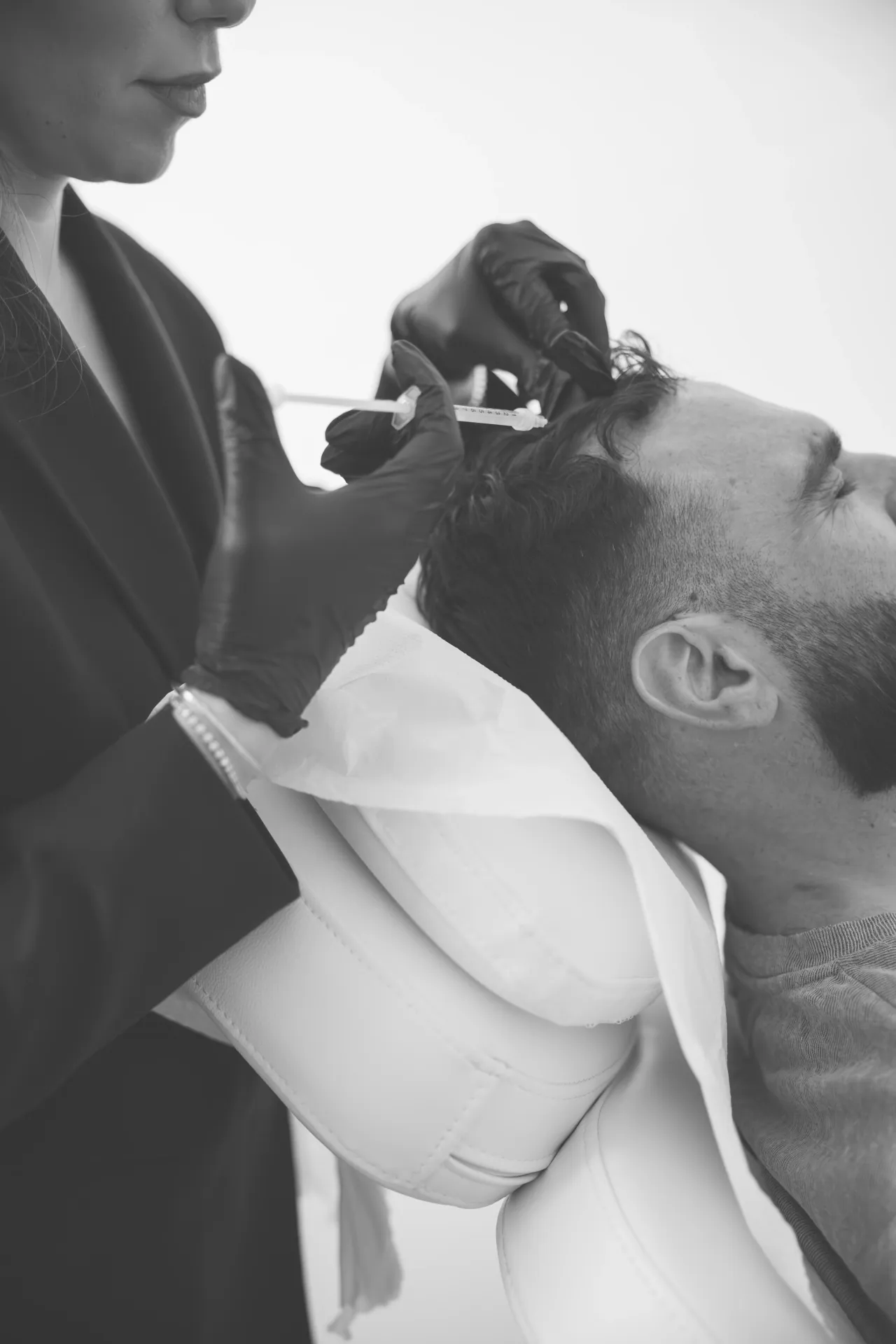
What is scalp Microneedling?
Microneedling is a treatment that creates thousands of controlled micro-channels in the scalp using fine needles.
Controlled micro-injury activates the body’s natural healing mechanisms, encourages release of growth factors, and supports local renewal. It may also improve penetration of active ingredients into the scalp.
Microneedling is usually not a standalone treatment for hair loss, but part of a personalized comprehensive plan.
Treatment benefits
- Stimulation of the scalp’s natural renewal mechanisms
- Encouragement of local healing processes
- Support for hair follicle activity
- Improved penetration of active ingredients into the scalp
- Adjunct to PRP, iPRF, and mesotherapy
- Short recovery time
- Personalized as part of a treatment plan
- Treatment duration
- About 30–45 minutes
- Discomfort level
- When results appear
- Gradual improvement as part of a combined plan
- Number of treatments
- Usually a series of 4–6 treatments, depending on scalp condition and goals
- Duration of effect
- Varies according to the plan and combination with other treatments
Questions & answers
How does the treatment work?
Microneedling creates controlled micro-channels in the scalp, activating natural healing and encouraging local renewal.
Micro-channels may also improve penetration of active ingredients and support follicle activity.
The treatment may help by:
- Stimulating scalp renewal mechanisms
- Supporting hair follicle activity
- Improving penetration of active ingredients
- Improving the scalp environment
- Combining with regenerative and medical treatments
The goal is to support scalp renewal as part of a personalized treatment plan.
Who is the treatment suitable for?
The treatment may suit as part of a plan in cases of:
- Androgenetic alopecia
- Hair thinning in men and women
- Telogen effluvium (when appropriate)
- Reduced hair density
- Desire to improve penetration of active ingredients into the scalp
- Combination with biological or medical treatments
Not every patient is suitable; suitability is determined after medical assessment.
How is the treatment performed?
Treatment is performed with a dedicated Microneedling device that creates controlled micro-channels in the scalp.
Treatment depth and number of passes are personalized according to scalp condition and goals.
Microneedling is often combined with active ingredients or regenerative treatments in the same plan.
Is Microneedling suitable for all types of hair loss?
No. Effectiveness depends on the cause of hair loss, scalp condition, and follicle status. A medical assessment is performed before treatment to tailor the plan.
Is one treatment enough?
Usually not. Microneedling works gradually, so a series of treatments is often recommended. The number and frequency are personalized.
When can results be seen?
Improvement appears gradually over the weeks and months after starting treatment, especially when Microneedling is combined with other treatments in a comprehensive plan.
Can it be combined with other treatments?
Yes. Microneedling can be combined with PRP, iPRF, scalp mesotherapy, exosomes, medications such as Minoxidil, Finasteride, and dutasteride, and other treatments according to medical assessment.
Combining treatments addresses multiple mechanisms of hair loss and improves outcomes.
What are the possible side effects?
After treatment, redness, local sensitivity, mild burning, or mild swelling may occur. Tiny bleeding points may appear and resolve quickly.
In most cases you can return to routine the same day or the next day. As with any medical treatment, rarer risks also exist. Before each treatment, a medical consultation assesses suitability and fully explains benefits, risks, and possible side effects as part of informed consent.
Is Microneedling a standalone treatment?
In most cases Microneedling is not used alone, but as part of a comprehensive hair loss plan. According to medical assessment, it can be combined with medication, PRP, iPRF, mesotherapy, or other regenerative treatments to improve the scalp environment and support follicle activity over time.
In summary
Scalp Microneedling is a regenerative treatment based on controlled micro-channels that activate renewal and may improve penetration of active ingredients.
It is usually part of a comprehensive hair loss plan according to medical assessment and treatment goals.